The Illusion of Trust
It's 11:45 PM. You check your exterior camera “one last time.”
The perspective shifts. A blur of movement. One person, then three, then seven. They aren't holding suitcases; they are holding red cups.
Your stomach drops. Your “Passive Income” dream just turned into a police report.
Every short-term rental insurance claim, every neighbor complaint, and every ruined weekend starts with the exact same mistake: ambiguity. You trusted a generic PDF template to protect your $500,000 asset.
In 2026, trust is not a strategy. Infrastructure is.
To scale, you need a House Rules framework that is legal, legible, and non-negotiable. Here is the ultimate template used by the top 1.0% of Superhosts.
The Psychology of “Fair Warning”
Before we get to the template, understand this: Guests don't break rules because they are malicious. They break them because they are ambiguous.
If you say “No loud noise,” that is subjective. If you say “No noise over 60 decibels (roughly conversation level) after 10 PM,” that is a measurable data point.
Your House Rules aren't a list of demands; they are a Contract of Comfort. They exist to protect your property and to ensure the next guest gets a 5-star experience. When you frame it as mutual respect, guests follow it. When you frame it as arbitrary restriction, they ignore it.
“No loud noise” = subjective, unenforceable, ignored.
“No noise exceeding 60dB after 10 PM” = measurable, defensible, respected.
Every rule you write must pass this test: Can I measure it?
The “Essential” Airbnb House Rules Template
Below is the master template broken into categories for Information Architecture. Click “Copy” to grab each section.
Section 1: The Non-Negotiables (Immediate Eviction)
1. NO PARTIES OR EVENTS
This listing has a strict Zero-Party Policy. Any unauthorized event (defined as any gathering exceeding the registered guest count) will result in immediate eviction, forfeiture of all rental fees, and a minimum fine of $500.
2. SMOKING POLICY
This is a 100% Smoke-Free listing. This includes the balcony/patio. This applies to cigarettes, e-cigarettes, cigars, and cannabis. Evidence of smoking (odor, ash, etc.) will incur a $300 specialized cleaning fee.
3. OCCUPANCY LIMITS
Maximum occupancy is [X] guests. Unauthorized overnight guests violate our insurance terms. Each unauthorized guest will incur a $75 per person, per night fee.
Section 2: Neighborhood Harmony (Protecting Your Reviews)
1. QUIET HOURS
10:00 PM to 8:00 AM daily. Please respect our neighbors.
2. NOISE MONITORING
To protect the neighborhood, this property uses NoiseAware or a similar privacy-safe noise monitoring device. It measures decibels, not words. Repeated violations during quiet hours will result in eviction.
3. PARKING
Parking is strictly limited to [Number of Spots]. Please use only [Assigned Spots/Driveway]. Do not block neighbors' driveways or street access.
Section 3: Property Preservation (Protecting Your Asset)
1. PETS
[No Pets are permitted on the property.]
OR
[Pets are permitted with prior approval and payment of the Pet Fee. Please keep pets off the furniture and do not leave them unattended.]
2. APPLIANCES & UTILITIES
Please do not adjust the AC below 70°F or the heat above 74°F. Ensure all lights and the coffee machine are turned off when you leave. Walkthroughs for the smart-home tech can be found in the Digital Guidebook.
3. LOCKING UP
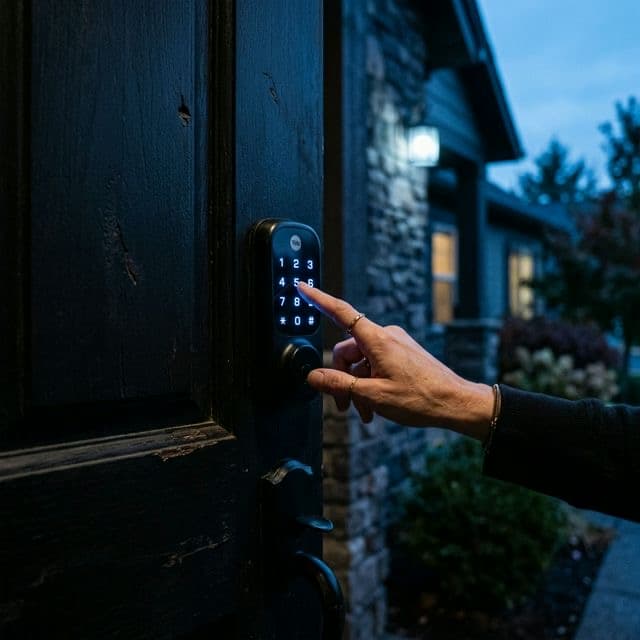
Always ensure the front door is locked using the keypad when leaving the property. We are not responsible for the loss of personal items.
Why Your Printed Guidebook is a Liability
You now have the perfect rules. But how do you deliver them?
If you rely on the three-ring binder, you rely on hope. (We wrote an entire article on why the paper binder is dead.)
Friction
Guests are tired. They aren't reading 10 pages of text. They want the Wi-Fi password and the door code — in that order.
Update Lag
A code changes. A neighbor complaint causes you to move quiet hours to 9 PM. Your printed binder is instantly obsolete.
The "I Didn't See It" Trap
In a dispute, a guest will always claim ignorance. A physical book provides zero trackability. A digital delivery provides a timestamped access log.
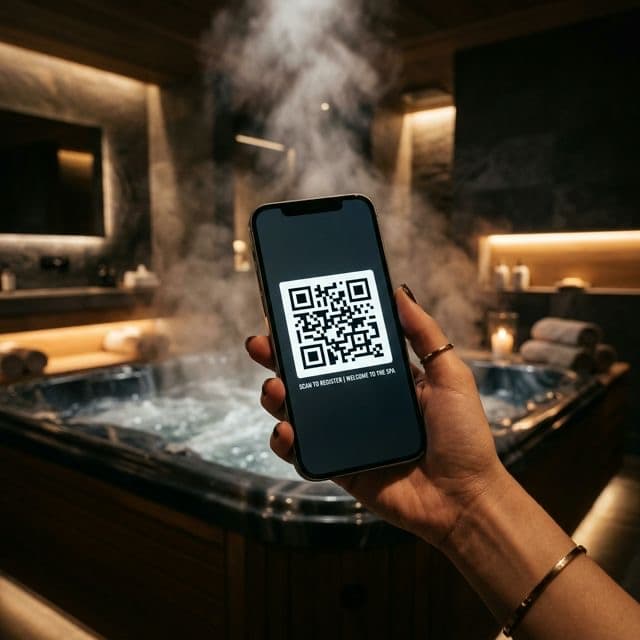
Contextual QR codes deliver the right rules, at the right time, in the right place.
Transitioning to Digital Enforcement
We don't put these rules on paper. We integrate them into the Information Infrastructure of the property.
In 2026, the elite Superhost uses a digital guidebook to enforce rules through Contextual Delivery. Instead of showing the hot tub rules in the entryway binder, you place a Contextual QR Code right next to the hot tub. (This concept is central to automating the perfect check-in.)
When the guest scans it, they don't get 10 pages of legal text; they get a 10-second video walkthrough showing how to use the jets — which includes the rules about quiet hours and no glassware.
Contextual QR Codes
Place small, elegant QR codes at each appliance. The guest scans it and gets a 10-second walkthrough — rules included.
Noise Monitoring
Privacy-safe sensors that measure decibels, not words. Automated alerts before neighbors call the police.
Automated Messaging
Send rules at check-in, quiet hours at 9:45 PM, and checkout checklists at 10 AM — all on autopilot.
Common Questions
Rules are for Humans; Enforcement is for Systems
The “Passive Income” dream isn't a myth; it's just not passive. It's Autonomous.
To scale to 100 properties, you cannot be a 24/7 helpdesk or a security guard. You need a system that anticipates guest needs, automates revenue, and defines clear, measurable boundaries. See how these rules directly combat the 10 most common guest complaints.
The rules protect your property. But the method of delivery — the digital interface — protects your sanity.
Stop hoping they read the binder. Start hosting for the 21st century.
Frequently Asked Questions
Quick answers about Airbnb house rules and guest management.
Ready to enforce your rules — automatically?
Build a digital guestbook with auto-delivered house rules in under 2 minutes. Free for 7 days — no credit card required.
Try Staxy Free