
The 4-Star “Death Spiral”
It's a 4.7.
To a normal person, a 4.7/5 is an ‘A-’. In the brutal ecosystem of Airbnb in 2026, it's a death sentence. It's the invisible line where your search ranking begins to sink, your nightly rate loses its “luxury” premium, and you start attracting the “bargain hunters” — the very guests who complain the most.
Most bad reviews aren't born from catastrophes like fires or floods. They are born from The Gap: the space between what the guest expected and what they actually experienced.
If you want to scale to a 10-property portfolio, you cannot “hope” for happy guests. You need to identify the friction points and kill them with infrastructure. Here are the top 10 complaints that kill your rating, and the precise, automated way to prevent them.
The danger zone
Complaints from 'The Gap'
More bookings at 4.9+
The Top 10 Complaints (And Their Digital Antidotes)
Each complaint follows the same pattern: ambiguity creates frustration. Clarity — delivered digitally — eliminates it.
"The Place Wasn't Clean" — The #1 Review Killer
The Problem: Even if your cleaner is elite, a single stray hair is a 'fail.' Guest perception of cleanliness is emotional, not rational.
The Digital Fix: Include a 'Cleaning Standard' section in your digital guidebook. Show a 15-second time-lapse of your pro-cleaning team or a 'Certified Clean' checklist with a timestamp. When guests see the effort, they are psychologically less likely to hunt for flaws.
"I Couldn't Find the Place / Get In"
The Problem: There is nothing more stressful than arriving in a new city at midnight and being unable to unlock the door. Panic sets the tone for the entire stay.
The Digital Fix: Don't send a wall of text. Use a digital guidebook with GPS-integrated mapping and a video walkthrough of the lockbox or smart lock. Read our full guide to automating the perfect check-in for the step-by-step playbook.
"The Wi-Fi Didn't Work"
The Problem: In 2026, Wi-Fi is a utility, like water. If it fails, the stay fails. Remote workers will leave a 1-star review over an unreliable connection.
The Digital Fix: Place a 'Connect to Wi-Fi' button at the very top of your digital guide with one-tap auto-connect. If the router needs a reset, include a video showing exactly where it is and how to do it. No phone call required.
"The Amenities Weren't as Described"
The Problem: The Hot Tub / AC / Coffee Machine problem. Guests assume 'broken' when they actually mean 'I don't know how to use it.' User error becomes your bad review.
The Digital Fix: Don't just list a hot tub. Place a QR code on the hot tub that opens the specific 'How-to-Use' page in your guide. A 10-second video walkthrough prevents 'user error' from being blamed on your 'broken' equipment.
"It Was Too Noisy"
The Problem: Street noise, neighbors, thin walls — things you can't control. But you can control whether it's a surprise.
The Digital Fix: Add a 'Neighborhood Notes' section to your guidebook. 'The area is vibrant — Friday and Saturday evenings may have some street activity.' Guests forgive known flaws; they penalize surprises. Back this up with enforceable house rules.
"Check-in Was Too Early / Late"
The Problem: The check-in and check-out times are always listed, but guests forget or assume flexibility.
The Digital Fix: Automated messaging: send a 'Check-in at 3 PM' reminder 24 hours before arrival, with a warm note and a link to the full arrival guide. At 10 AM on checkout day, send the checkout checklist.
"The Host Was Unresponsive"
The Problem: Guests panic when they send a message and don't hear back within 15 minutes. It doesn't matter if you're sleeping.
The Digital Fix: Your digital guidebook IS the response. If 90% of questions are answered before they're asked, your actual message volume drops to near-zero. Frame the guide link as your 'Expert Concierge Support.'
"The Photos Were Misleading"
The Problem: Wide-angle lenses and strategic lighting create expectations that reality can't meet.
The Digital Fix: Include a 'Realistic Walk-Through' video in your guidebook — filmed on a phone, not a DSLR. Authenticity builds trust and calibrates expectations before arrival.
"There Were Bugs / Pests"
The Problem: In tropical or rural areas, insects are a fact of life. But to a city guest, one gecko is a health crisis.
The Digital Fix: Proactive transparency. 'Our villa is set in nature — you may see the occasional gecko or moth. This is normal and harmless!' Include it in your digital guide under 'Good to Know.' Prevention is a sentence.
"The Neighborhood Felt Unsafe"
The Problem: Perception of safety is often about unfamiliarity, not actual danger.
The Digital Fix: A 'Getting Around' section with well-lit route photos, saved Google Maps links, and local emergency contacts. When the guest feels oriented, they feel safe.
The ROI of the “Invisible Host”
The most satisfied guests are the ones who never have to speak to you.
This sounds counter-intuitive to “old school” hospitality, but modern luxury is defined by autonomy. A guest wants to feel like the house is theirs. When they have to text you to ask how to work the TV, you've reminded them that they are a “renter.”
When you provide a high-performance digital guidebook, you are providing Silent Service. You are answering the question before it's asked. (Learn how to build one from scratch.)
The Invisible Host Paradox: The less a guest needs to contact you, the higher they rate your “communication” score. A comprehensive digital guide IS communication — it's just delivered proactively instead of reactively.
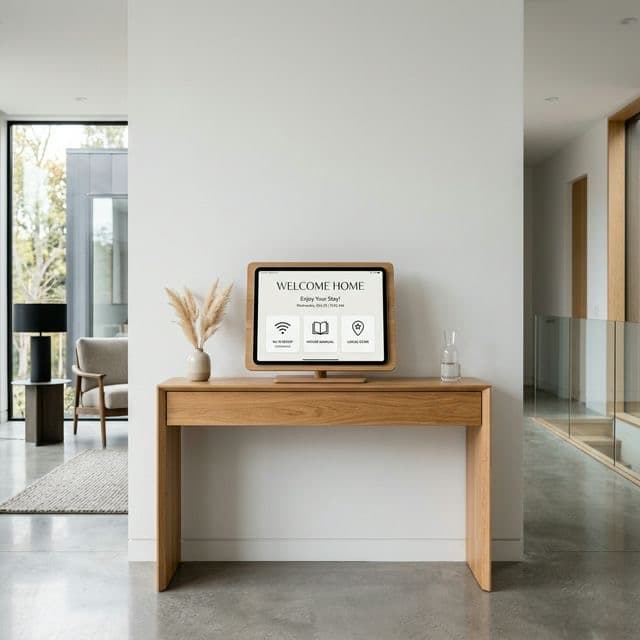
Silent Service — answering every question before it's asked.
Managing the “Expectation Gap” with Content
The secret to a 5.0 isn't a perfect house; it's perfect transparency.
The “No-Surprises” Section
Does your house have a lot of stairs? Is the neighborhood noisy on Friday nights? Put it in the guide. Guests will forgive a flaw if they were warned; they will penalize you if they were surprised.
Live Support Integration
Even with the best guide, things happen. Ensure your “Contact Host” button is prominent but framed as “Expert Concierge Support,” not “Help, something is broken.”
Prevention is Cheaper than Repair
You can spend your time apologizing and giving “partial refunds,” or you can spend your time building a digital infrastructure that makes complaints impossible.
The most successful Airbnb businesses in 2026 aren't the ones with the best furniture; they are the ones with the best systems.
Stop being a firefighter. Start being an architect. And if you want to understand how all of this feeds the algorithm, read how the 2026 Airbnb SEO algorithm actually works.
Frequently Asked Questions
Quick answers about preventing Airbnb guest complaints.
Kill the complaints. Automate the 5 stars.
Build a digital guestbook that answers every question before it's asked. Free for 7 days — no credit card required.
Try Staxy Free